
How I Turn Ideas Into Digital Experiences
Introduction
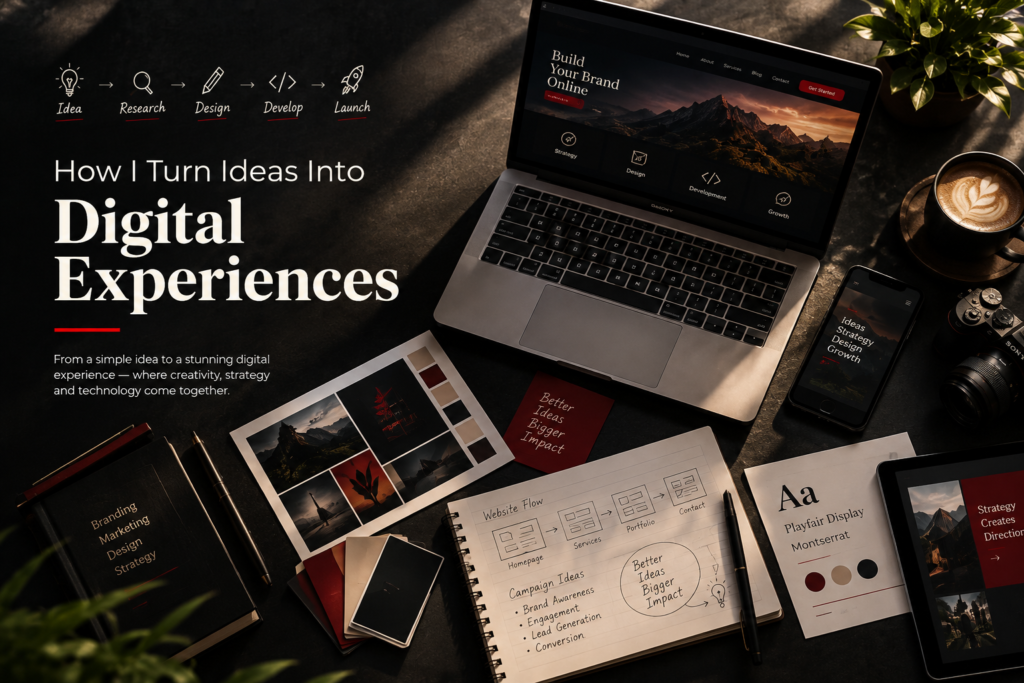
In today’s digital world, every successful project begins with an idea. Whether it is a new website, a personal portfolio, a business brand, or a creative concept, an idea is only the beginning. The real challenge is transforming that idea into a digital experience that communicates clearly, looks professional, and connects with the right audience.
I enjoy turning simple concepts into meaningful digital experiences by combining creativity, strategy, design, and purpose. For me, design is not only about creating something visually attractive. It is about understanding the idea behind a project and finding the right way to communicate it through every visual and interactive element.
Understanding the Vision
Understanding the Vision
Before I begin designing, I first focus on understanding the idea behind the project. I ask important questions: What is the purpose? Who is the audience? What message needs to be communicated? What action should users take?
Understanding these elements helps create a clear foundation for the project. Instead of designing simply for appearance, I make decisions based on the project’s goals and the people who will experience it.
Research and Inspiration
Understanding the audience, industry, competitors, and current design trends can provide valuable insights. However, I believe inspiration should never mean simply copying what already exists. It should be used as a starting point for developing something that feels original and relevant.
Turning an Idea Into a Strategy
Once the vision is clear, the next step is creating a strategy. I organize the information, define the structure, and determine how the different parts of the experience should work together.
A strong strategy makes the design process more focused. It helps determine what information deserves attention, what elements should be emphasized, and how users should move through the experience.
Creating the Visual Direction
This is where the idea starts becoming visible. I begin exploring typography, colors, imagery, layouts, icons, shapes, and other visual elements.
Every visual choice contributes to the personality of a project. Typography can create a particular mood, colors can communicate emotion, and imagery can help tell the story.
I aim to create a visual language that feels consistent, professional, memorable, and connected to the purpose of the project.
Designing With Simplicity
One of the most important principles I follow is simplicity. A design does not need to be complicated to be impressive.
Too many elements can make an experience confusing and overwhelming. By using clear layouts, balanced spacing, strong hierarchy, and focused content, I can create designs that feel clean while still having a strong visual impact.
For me, simplicity is not about removing creativity. It is about making creativity easier to understand.
Creating a Strong User Experience
A digital experience should always consider the person using it. A beautiful website can still fail if users cannot find what they need or understand what to do next.
I focus on creating clear navigation, readable content, logical layouts, responsive designs, and intuitive interactions. Every section should guide users naturally and make their journey feel effortless.
The goal is to make the experience feel so natural that users can focus on the content rather than trying to figure out how the interface works.
The Power of Content
Design and content are closely connected. Visuals may attract attention, but content gives the experience meaning.
Strong headlines create curiosity, clear descriptions communicate value, and effective calls to action help users take the next step. When content is organized properly and supported by thoughtful design, the overall message becomes much stronger.
I believe every word and every visual element should work together to tell the same story.
Designing With Purpose
Good design always has a reason behind it. Whether the goal is to build a personal brand, attract customers, showcase work, introduce a service, or communicate an idea, every element should contribute to that goal.
I try to avoid unnecessary decoration and focus instead on elements that improve communication and create value.
A successful design should answer one important question: Does this help the user?
Attention to Detail
Great experiences are often created through small details. Spacing, alignment, font sizes, colors, button styles, icons, images, transitions, and consistency can all influence how professional a digital experience feels.
I take time to review these details because small improvements can create a significant difference in the final result.
Consistency is especially important. When different elements feel connected, the entire experience becomes more professional and trustworthy.
Testing and Refining
The first version is rarely the final version. After creating a design, I review it from different perspectives and look for areas that can be improved.
I consider whether the content is easy to understand, whether the layout feels balanced, whether important information stands out, and whether users can move through the experience naturally.
Feedback is also an important part of this process. Different perspectives can reveal problems that may not be obvious during the initial design stage.
My Creative Philosophy
My creative philosophy is simple: design with purpose, create with curiosity, and always think about the people behind the screen.
I believe good design combines logic and creativity. It needs structure, but it also needs personality. It should be professional, but it should still feel human.
The best digital experiences are those where every element feels intentional and nothing feels unnecessary.
Conclusion
Turning ideas into digital experiences is a process of understanding, planning, creating, testing, learning, and improving. What begins as a simple thought can become a powerful experience when it is supported by the right strategy and thoughtful design.
I believe the best digital experiences are not created by adding more. They are created by understanding what truly matters and presenting it in the right way.
My approach is simple: understand the vision, discover the story, plan with purpose, design with creativity, focus on the user, refine every detail, and create something that makes an impact.
Because behind every successful digital experience is an idea—and with the right combination of creativity and purpose, even a simple idea can become something remarkable.